
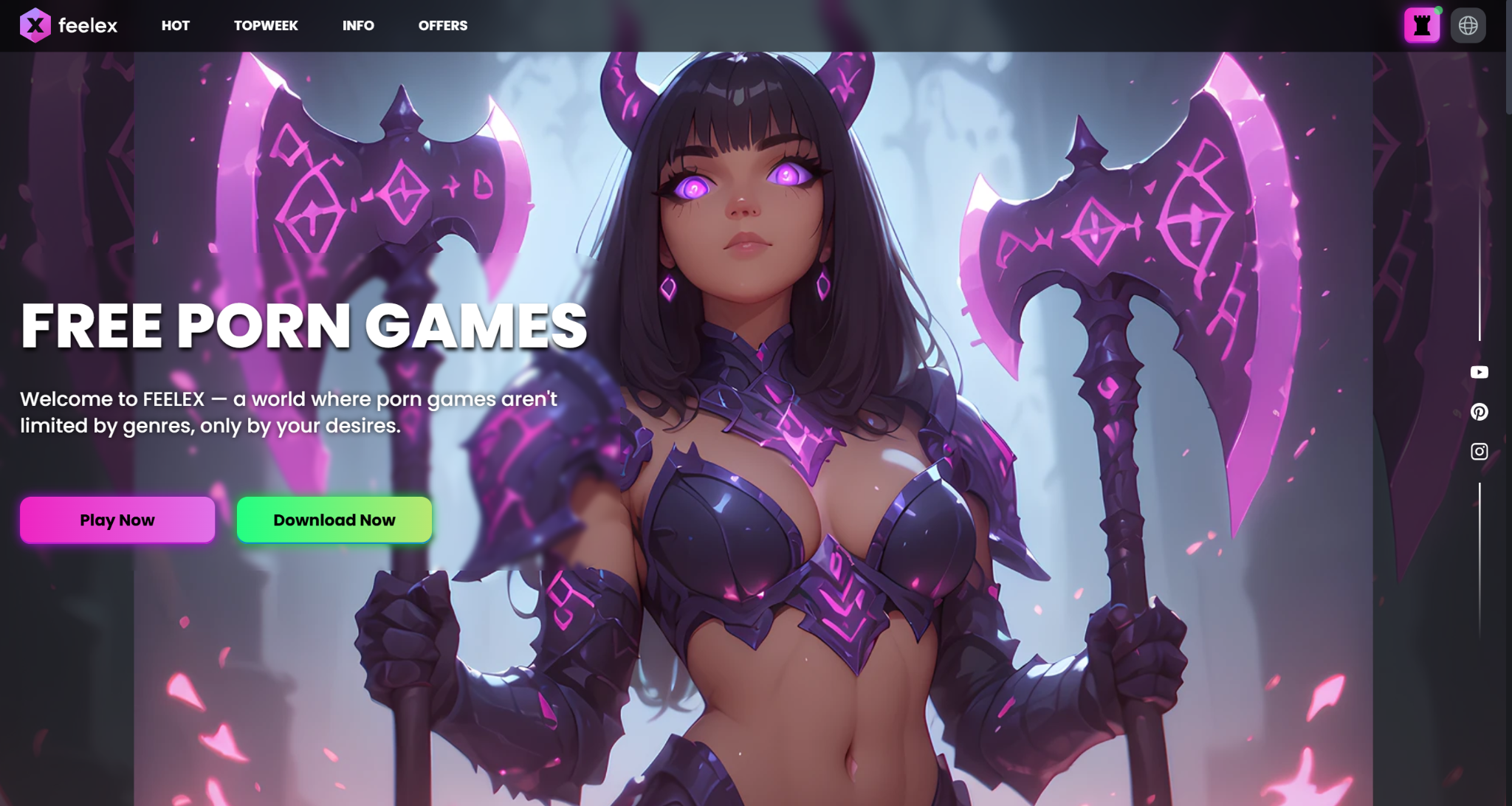
Finding adult content online is easy. Finding an adult game that is actually worth playing is a different problem.
A search can return hundreds of titles within seconds, but those results rarely explain much. A screenshot may look impressive while the game itself is unfinished. A project with simple artwork may turn out to have excellent writing and several hours of content. Another game may have been popular two years ago but no longer receive updates.
The difficult part is not finding something to click. It is separating games that fit your interests from projects that only look promising on a download page.
Adult Games Cover More Genres Than Most People Expect
The phrase “adult game” is often treated as though it describes one type of content. In reality, it covers a surprisingly wide range of experiences.
There are visual novels built almost entirely around dialogue and character relationships. Some games use RPG systems, exploration, inventories, and combat. Others are management simulations, puzzle games, dating experiences, card games, or short interactive animations.
Even games that look similar in screenshots can feel completely different once they start.
One visual novel might focus on a slow story that takes several hours to develop. Another may move quickly between short scenes and simple choices. A 3D game could offer free exploration, while a different project using similar character models may be little more than a scene viewer.
This variety is good for players, but it also makes recommendations difficult. A game can be well made and still be a poor match for someone who prefers another style.
Screenshots Rarely Tell the Whole Story
Adult games are especially easy to market through a few attractive images.
A developer can show polished character models, a detailed environment, or a dramatic scene without revealing how the game actually plays. The interface may be awkward. The dialogue may be unfinished. The visible scene might represent most of the available content.
The opposite situation happens as well.
Some independent games look basic at first glance because they were created by one person with limited resources. Once played, however, they may offer interesting characters, unusual mechanics, or writing that gives the project its own personality.
This is why judging a game entirely from its promotional artwork is unreliable.
Screenshots can show the visual direction, but they cannot demonstrate pacing, controls, humour, progression, or how much freedom the player actually has. Those details usually determine whether a game remains interesting after the first few minutes.
The Best Game Depends on the Kind of Session
Not every player is looking for a long story.
Sometimes the goal is to open a short game, explore it for fifteen minutes, and move on. At other times, a player may want a larger project with recurring characters, several locations, and updates that continue the story over months or years.
Neither format is automatically better.
Short games work well because they do not ask for much commitment. They usually explain their mechanics quickly and place the main content within easy reach. Longer projects have more room for character development, world-building, and choices that matter later.
The problem begins when a game does not make its scale clear.
A player expecting a quick browser experience may lose patience with a slow introduction. Someone looking for a detailed visual novel may be disappointed by a title that ends after one short sequence.
Useful descriptions and categories help set expectations before the game begins.
Browser Access Makes Exploration Less Annoying
Downloading a large game makes sense when the player already knows what they are getting. It is less appealing when the title is unfamiliar.
The usual process may involve opening several mirrors, checking file versions, extracting an archive, and working out whether the game is compatible with the device. That is a lot of effort for something that might be closed after five minutes.
Browser games make experimentation easier.
A player can open a title, see how it feels, and leave without managing files afterward. This is useful when comparing several genres or trying games from unknown developers.
Someone browsing free porn games online may move from a fantasy RPG to a dating simulation and then to a short puzzle game in the same session. That kind of exploration is less likely when every title requires a separate download and setup process.
Browser access does not replace downloadable games. Larger projects often perform better when installed locally, particularly when they include high-resolution animation or complex environments. The browser simply offers a more convenient way to discover what deserves further attention.
Categories Matter More Than Huge Numbers
A website may claim to have thousands of games, but a large total does not automatically create a useful catalogue.
Without clear organization, more content can make discovery worse.
Players should be able to separate browser titles from downloads, find a preferred visual style, and narrow the selection by genre or theme. A person looking for an anime-inspired visual novel should not need to scroll through pages of unrelated 3D simulations.
Good categories also help users discover games they did not know how to search for.
Someone may enjoy a management game without realizing that the genre has a specific name. Another player may start with a familiar character parody and later discover original fantasy projects through related tags.
The organization around the games becomes nearly as important as the number of titles available.
Independent Developers Make Discovery Complicated
A large portion of adult gaming is produced by solo developers and small teams.
These creators often publish wherever it is convenient: personal pages, subscription platforms, forums, file hosts, community servers, or storefronts. Links change, projects move, and old versions can remain online long after a new release appears elsewhere.
The creator may be doing everything alone, including artwork, programming, writing, testing, promotion, and replying to players. Keeping every listing and download mirror updated is not always the highest priority.
As a result, finding the official or newest version of a game can be surprisingly difficult.
A centralized platform cannot solve every problem, but it can give players a clearer starting point. On the game catalogue, titles can be grouped and presented in a consistent format instead of being scattered across unrelated pages.
This also helps smaller developers.
A popular project already has people discussing every update. A new game without an established audience may receive little attention even when it is well made. Appearing in a catalogue gives it a chance to be discovered by players browsing the genre rather than searching for a specific title.
Updates Can Be More Important Than Polish
An unfinished adult game is not necessarily a bad game.
Many of the genre’s best-known projects have been developed gradually over several years. Early versions may include only a small part of the planned story, but regular updates allow the world, characters, and gameplay systems to expand.
For players, the update history can reveal more than a polished trailer.
A visually impressive game that has not changed in two years may never be completed. A rougher project with frequent updates may be a better choice for someone who wants to follow its development.
There is also a difference between an unfinished game and an abandoned one.
An unfinished project may have an active creator, regular progress reports, and a clear direction. An abandoned title may still appear in searches without any obvious warning that development has stopped.
Knowing the difference prevents players from investing time in a story that is unlikely to continue.
Popularity Helps, but It Should Not Decide Everything
Popular games usually become popular for a reason. They may have strong artwork, memorable characters, active communities, or years of accumulated content.
However, popularity can also hide smaller projects.
The most visible titles tend to receive even more recommendations, while unusual games remain difficult to discover. A player who only opens the highest-ranked results may repeatedly encounter the same visual styles and gameplay systems.
Browsing less obvious categories can be more rewarding.
Independent adult games often experiment because they are not trying to satisfy a huge mainstream audience. A small project may combine genres in a way that a larger studio would consider too risky or too specific.
Not every experiment succeeds, but the ones that do can feel more original than the familiar games appearing in every popular list.
A Good Catalogue Saves Time Rather Than Making Decisions
No website can identify one perfect adult game for every visitor.
Preferences are too different. Some players care most about visual quality. Others tolerate rough artwork if the story is interesting. Some want complete projects, while others enjoy following games through years of development.
The purpose of a useful catalogue is not to make the choice for the player.
It should reduce the amount of irrelevant content they need to examine. Clear categories, accurate descriptions, browser access, screenshots, and update information make it easier to decide which games deserve a closer look.
That is ultimately what makes adult game discovery difficult: there is no shortage of content, but there is a shortage of context.
Once games are organized in a way that reflects how people actually choose them, finding something worth playing becomes much less dependent on dead forum links, random recommendations, and attractive screenshots that reveal very little.